

Different types of dust are used in these tests, depending on the specific standards and requirements. Common types include talcum powder, cement dust, and standardized test dust that mimics real-world conditions. The choice of dust depends on the intended operating environment of the product being tested.
Dust tests are typically conducted in accordance with international standards such as IP5X and IP6X (Ingress Protection ratings), MIL-STD-810 (U.S. Military Standard), and IEC 60529 (International Electrotechnical Commission standard). These standards provide guidelines for test procedures and acceptance criteria.
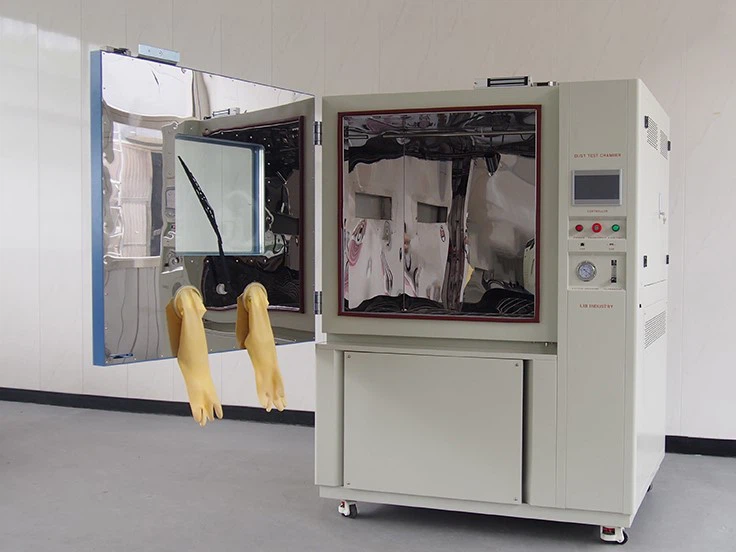
- A sealed enclosure to contain dust
- A dust circulation system
- Temperature and humidity control
- Observation windows or video monitoring systems
- Sample mounting fixtures
- Chamber size and capacity
- Dust circulation and distribution capabilities
- Temperature and humidity control range
- Compliance with relevant standards
- Ease of operation and maintenance
Conducting a Dust Test: Step-by-Step Process
- Cleaning and inspecting the test sample
- Calibrating the dust test chamber
- Preparing the specified dust type and quantity
- Setting up monitoring equipment if required
- Place the test sample in the
- Seal the chamber and start the dust circulation system
- Maintain the specified dust concentration for the required duration
- Monitor and record test conditions throughout the process
Post-Test Analysis
- Visual inspection for dust ingress
- Functional testing to ensure the product still operates correctly
- Disassembly to check for internal dust accumulation
- Documentation of results and comparison against acceptance criteria
- IP5X indicates dust-protected (limited ingress of dust permitted)
- IP6X indicates dust-tight (no ingress of dust)
- No dust ingress that interferes with product operation
- Maintenance of safety features
- No accumulation of dust in critical areas
The dust test is crucial for evaluating the reliability and durability of various products, particularly those exposed to harsh environments. By replicating real-world dusty conditions, manufacturers can detect vulnerabilities and design flaws that could affect performance over time. This early identification helps in refining the product's quality, ensuring it can withstand prolonged exposure to dust without compromising functionality.
If you're looking to conduct dust tests or need more information about environmental testing solutions, don't hesitate to reach out. At LIB Industry, we specialize in providing turn-key solutions for environmental testing, including state-of-the-art dust test chambers. Contact us at info@libtestchamber.com
1. Smith, J. (2021). "Environmental Testing Methods for Electronic Products"
2. Johnson, A. et al. (2020). "Dust Resistance in Modern Electronics: Challenges and Solutions"
3. International Electrotechnical Commission. (2019). "IEC 60529: Degrees of Protection Provided by Enclosures (IP Code)"
4. U.S. Department of Defense. (2019). "MIL-STD-810H: Environmental Engineering Considerations and Laboratory Tests"
5. Brown, R. (2022). "The Impact of Dust on Industrial Equipment Performance"
6. Lee, S. and Park, K. (2021). "Advancements in Dust Test Chamber Technology"


